How to Be Patient With Rainy Day Leaf Collection

Brian’s fitness journal after a brain stroke

Written October 7, 2025

Hello, Dear Readers,

Today, the weather decided to misbehave—again. After yesterday’s run, I had mentally committed to my next big adventure: Rainy Day leaf collection. It’s the kind of chore that feels noble in theory but suspiciously endless in practice. I even checked the forecast like a responsible adult and saw only a “chance” of early morning rain. Perfect, I thought. I’ll just wait until early afternoon, when the sun peeks out, and get it done.

Instead, I woke up to the sound of a downpour so aggressive it could’ve washed away my motivation. This wasn’t a “light drizzle” situation—it was the kind of steady, unapologetic rain that makes you reconsider your life choices and your roofing. Looking outside, I saw my ambitious leaf plans swirling down the gutter, literally.

This year has been unreasonably rainy—as if Mother Nature subscribed to the “water your lawn… excessively” school of thought. So, it is not uncommon that I need to do rainy day leaf collection. Temperatures have dropped, too, with my wife grumbling that mornings have dipped into the 50s. She’s up early for work, while I, on the other hand, can afford to pick my weather battles. I’d like to call that “flexibility,” though it might also be “strategic procrastination.”

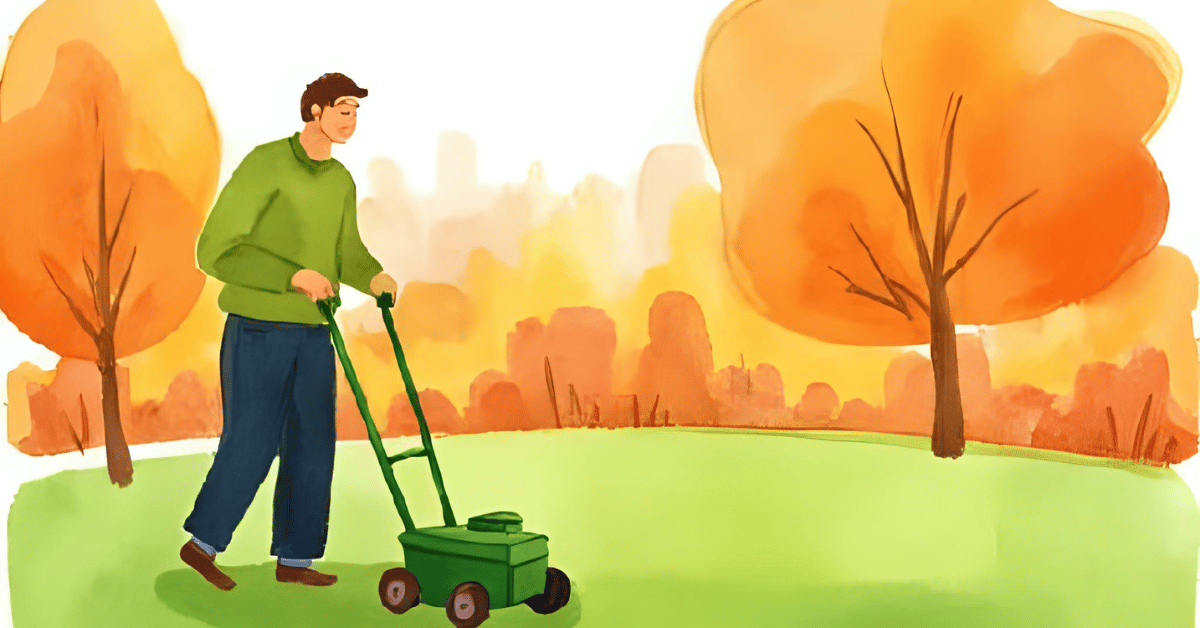
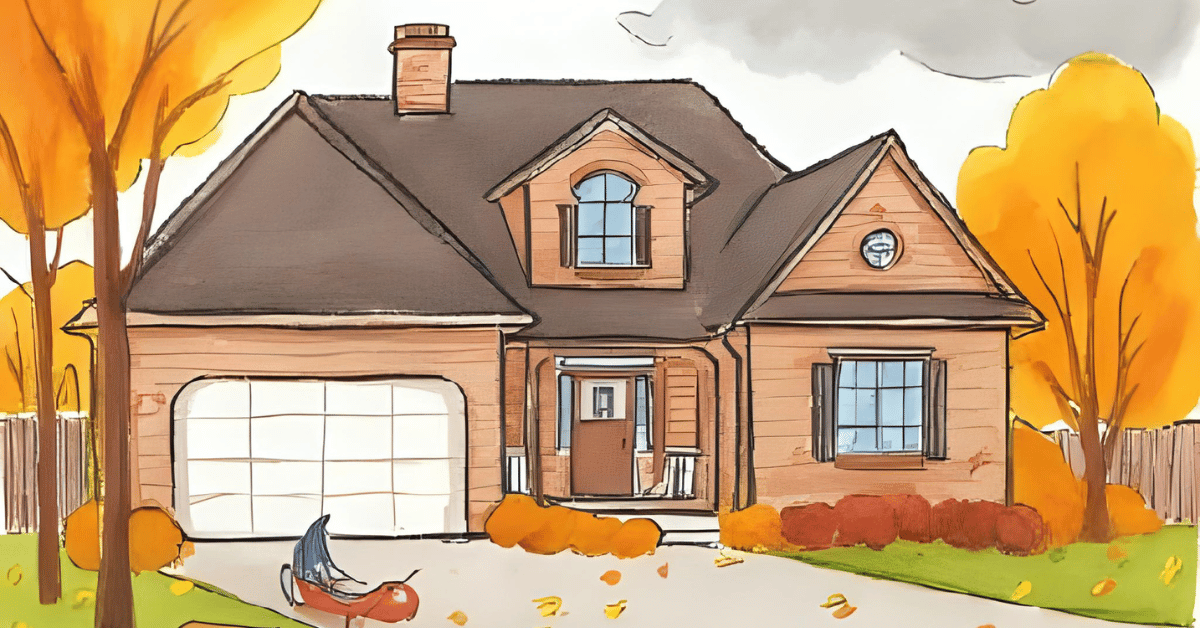
The trees in front of our house have clearly joined the rebellion. They’re producing leaves faster than I can collect them, forming crunchy layers that mock my efforts. The rain, meanwhile, turns those leaves into heavy, sticky mats that cling to the ground like soggy lasagna. I use my leaf vacuum, normally as my trusted companion, but it becomes a glorified paperweight with the wet leaves.

Adding to the comedy, our house sits conveniently at the end of the court—an unfortunate spot where all the neighborhood leaves come to rest. It’s as if every gust of wind plays a game of “let’s dump it on his yard.” I sometimes think my trees are innocent; it’s everyone else’s that are plotting against me.

After days of rain delays, the leaves have piled up so much that I could probably lose a small pet in there. The irony? The rain doesn’t stop the trees from shedding more. It’s like the universe saying, “Oh, you’re behind? Let’s make it worse.”

Still, I try to look on the bright side—

Still, I try to look on the bright side—or at least the dry side. The forecast says Thursday will finally clear up. If it does, I’ll be out there with my vacuum and rake, reclaiming my yard one soggy pile at a time. I like to think of this as a test of patience and persistence—kind of like gardening, but with less zen and more muttering under your breath.

Diligence really is the secret weapon with chores like this. You show up, even when the sky looks like it’s about to ruin your plans. Maybe that’s the quiet lesson hidden under all the damp leaves: nature may win a few battles, but persistence (and a good weather app) usually wins the war.

So, for now, I’ll sip my coffee, watch the rain mock my to-do list, and wait for Thursday. When the sun returns, I’ll be ready—leaf vacuum charged, gloves on, and playlist queued. Because if the weather’s going to conspire against me, I might as well make it a stylish defeat.

This is What I Learned: Lessons from Today’s 10K

Brian’s fitness journal after a brain stroke

Written October 4, 2025

Hello Dear Readers,

I keep reminding myself that progress isn’t a straight line—it’s more like a hilly trail with a few unexpected potholes. Today was one of those “downhill” days.

When you chase a goal and the results don’t match your effort, disappointment sneaks in like a side stitch. For me, that moment came during today’s 10K.

Maintaining a 10K pace has always been tricky—it’s long enough to test endurance but short enough to tempt you to sprint too early. My wife once said that mid-distance runs (around 10–21 km) are the most deceptive: go too fast at the start, and you’ll spend the rest of the run questioning your life choices.

I’ve been running for years, so I’m no rookie. My app gives me pace updates every quarter-kilometer, helping me track my rhythm. Lately, though, I’ve wanted to push harder. Sometimes that push pays off; sometimes it backfires and slows me down overall.

Today I crossed the 10K finish mark but didn’t smash through the wall I’ve been chasing. Still, I think I might have cracked it a little. Whether that crack grows or seals itself back up—well, the next few runs will tell.

Even though I haven’t hit my target pace yet, I’m still improving. My 10K average today was faster than my last year’s normal 5K, and that’s worth celebrating.

Yesterday, however, was a slog. I had zero energy—felt like my batteries were running on nostalgia alone. I started strong today, but by the end of my first kilometer, my early lead had vanished. My wife reminded me that cardio readiness fluctuates daily. Sadly, my app doesn’t track that—just my pace. My watch focuses on blood pressure, which, given my health priorities, is fair—but I wish it could multitask.

The biggest lesson? Patience. You can’t sprint your way through every wall. Some need chipping away, one steady stride at a time. My app logs prove I’m moving forward, even if the pace isn’t dramatic.

Maybe I’ll break my progress into smaller goals—a few seconds faster here and there—until the “personal best” feels inevitable. For now, I’m calling today’s run a success. Tired, yes. But still moving forward.

Muscle vs. Scale: The Real Weight Loss Struggle

Brian’s fitness journal after a brain stroke

Written October 1, 2025

Hello Dear Readers,

Laundry: my most persistent rival in this fitness journey. Forget to do it one day, and suddenly tomorrow’s run is delayed because someone (me) had to play catch-up with socks and T-shirts. So yes, today’s run started later than ideal. But the good news? When I finally did step on the scale afterward, my weight had dropped back into my “target zone.” The not-so-good news? It was clinging to the ceiling of that zone like a cat refusing to leave its perch.

Now, here’s the sneaky thing about scales: they’re master illusionists. The number looks comforting, but sometimes it’s smoke and mirrors. In my case, this “drop” was less about losing fat and more about muscle quietly packing its bags. And no, I wasn’t thrilled to wave goodbye.

For the past couple of months, keeping my weight steady has been a balancing act. When I was mowing the lawn twice a week, I could eat with a bit more freedom. Now that the grass has slowed down, I can’t just eat like a hungry teenager and expect the scale—or my muscles—to cooperate. My wife, however, cracked part of the code. She used to be a stress-snacker, but now she manages cravings with weekly emotional reflections. (Honestly, it’s impressive. Imagine fighting potato chips with philosophy. And winning.)

She also panics whenever her muscle mass dips—which, honestly, is fair. Her solution was to up her protein and resistance training. And she’s right: when you shift focus from “weight loss” to “body composition,” progress looks very different. She’s building muscle now, even if the scale doesn’t move much. That’s when you realize that chasing a smaller number isn’t always the smartest goal—sometimes you need stronger, not lighter.

I’d love to copy her playbook, but my kidneys have me playing by different rules. Protein is like a VIP guest for me—I can only let a limited amount in. That means, while other people might just “eat more protein” to protect their muscles, I need to approach the puzzle differently. Still, I’ve managed to keep over 125 pounds of muscle packed into my 150-pound frame. That’s leaner than most guys my age, which makes me quietly proud—even when the scale pretends otherwise.

Sure, I’m a few pounds heavier than before my recent spike and drop, but I’m not losing sleep over it. (Well… unless laundry decides to strike again.) The truth is, both my wife and I now obsess more over body composition than over plain weight. And when she tells me she’s impressed with my progress, given the dietary limits I juggle, it means more than any “perfect” number ever could.

At the end of the day, the scale might tell part of the story, but muscles, mindset, and resilience are the real plot.

Why I Gained Four Pounds Overnight—and Why It’s Actually Good News with My Kidney Condition

Brian’s fitness journal after a brain stroke

Written September 29, 2025

Hello Dear Readers,

My legs and I are currently on speaking terms again—barely. Yesterday’s 10K run left me hobbling like I’d just completed a marathon with bricks strapped to my ankles. Recovery is not my strong suit; thanks to my kidney condition, I heal slower than the average adult male, and unlike gym bros, I can’t just down a mountain of chicken breasts to bounce back.

My doctor did let me nudge up my protein intake a bit, but it’s still a delicate balancing act. During summer, I was burning calories faster than an ice cube melts in Nashville heat, so keeping my weight steady was like playing nutritional Jenga.

Today’s run was… let’s call it “character-building.” I aimed for 10K, but my body voted strongly for “more like 5K.” Fatigue, poor sleep, temporary weight gain, and a side of sore legs made sure my performance stayed humbling. And speaking of sleep—last night mine was about as restful as trying to nap during a fire alarm test.

Dinner probably didn’t help. My wife, who avoids meat like it’s auditioning for a horror movie, made vegetarian chili to sneak in some extra protein. Tasty, yes. But let’s just say it left me producing enough gas to qualify as a renewable energy source. Add to that the three liters of water I downed, and I was on first-name terms with our bathroom.

The scale added its own drama this morning: four pounds heavier than Saturday. It is not as bad as you think when you have a kidney condition like mine. But before I accused my chili of conspiring against me, I noticed the breakdown. According to the fancy metrics, over half of that gain is muscle, and a quarter is water weight. My wife—now practically a part-time sports medicine researcher thanks to her own fitness challenges—reminded me that recovery often means muscles hoard water like dragons hoard gold.

So yes, the numbers will bounce around, but in a couple of days, I’ll be back in my target range. In the meantime, I’ll keep running, keep eating cautiously, and maybe keep a safe distance from vegetarian chili before long runs.

Rice Runs, Frozen Tofu Experiments, and the 10K That Got Away

Brian’s fitness journal after brain stroke

Written September 20, 2025

Hello Dear Readers,

Saturday morning in my household is a delicate dance between errands, exercise, and the eternal quest for puff pastry sheets. This week’s adventure began at the local Asian grocery store, because, well—running out of rice in an Asian household is basically the culinary equivalent of running out of oxygen. My wife needed vegetables, too, which meant the trip was officially sanctioned. So today, we went Asian grocery shopping.

Now, a trip to the Asian grocery shopping isn’t just a “pop in, pop out” operation. It’s a small expedition. The store recently started opening at 8 a.m., but let’s be honest: that’s early enough to threaten my carefully choreographed Saturday 10k schedule. My wife doesn’t mind—she has her own routines to juggle. But me? I get twitchy when my long run collides with cabbage shopping.

Back home, my wife immediately switched into surgeon mode, chopping vegetables with precision, bagging them up, and sealing them tighter than Fort Knox. Freezer prep is her art form. She even went bold this week, sneaking tofu into the vegetable bags. This was a first—frozen tofu. The great experiment. She worried about texture changes, but she sealed everything like she was shipping supplies to the International Space Station.

And here’s the thing: Asian groceries are magical, but they’re also heartbreakers. Prices are climbing faster than I can sprint a downhill kilometer. Bean sprouts—bean sprouts!—cost more than they have any right to. Tofu leapt from $1.69 to $2.33, and cabbage is flirting with the one-dollar-per-pound mark. My wife, ever the philosopher-economist, shrugged it off: “Vegetables are cheaper than getting sick.” She calls it an investment in future health, which is hard to argue with—even if I did want to whine about my wallet.

Meanwhile, my run schedule was wobbling. By the time we’d sorted rice, veggies, and freezer logistics, the Nashville sun was already plotting against me. I laced up for the 10k, determined to salvage the morning. The first half went fine—better than fine, actually—but by the second half, the temperature had risen to “why am I doing this again?” levels. Let’s just say I did not become the hero of my own running story that day. Half a run, half a victory.

Of course, I promised myself I’d make up the distance on Monday. I even checked the week’s forecast like it was my personal redemption arc. But life, as always, threw a curveball: mowing season isn’t done yet. And yes, I had to factor in pastry bites, because apparently, my errands also involve making sure puff pastry sheets are in stock for the week ahead. (Don’t ask how pastry became part of my training diet—it’s a long story involving taste buds and denial.)

Here’s the truth: seasonal transitions don’t happen in a neat, dramatic shift. They creep up on you. The weather hasn’t bullied me into full winter running mode yet, so I’m keeping things flexible. Saturday schedules will shift. Runs may be cut short. Puff pastry will mysteriously appear in the cart. But patience—and maybe a little tofu experiment—will get us through.

And in the meantime, there’s rice in the pantry, vegetables in the freezer, and a 10k penciled into my calendar with suspicious optimism. That’s what I call balance.

Rain, Runs, and Relentless Grass: A Nashville Tale

Brian’s Journal after Brain Stroke

Written September 24, 2025

Hello Dear Readers,

Nashville’s weather has been auditioning for the role of “most indecisive character in a soap opera.” One minute, sunshine. Next minute, a full-on rain performance with dramatic flair. Naturally, my lawn has been the stage victim—too soggy to mow the other day, yet somehow already plotting its overgrowth revenge.

Today’s to-do list included a 5 km run. Did the rain stop me? Not exactly. Did it try to slow me down? Absolutely. Imagine running while the sky wrings itself out like a wet towel over your head—that was me. By the midpoint, I felt as if the rain wasn’t just falling on me but siphoning my energy straight out of my legs. The cool air stiffened me up, and my pace slowed, but hey, I still finished. That’s a victory in my book.

Meanwhile, the lawn continues to mock me. Mowing is no small affair here—our backyard is hillier than a rollercoaster ride. My wife used to mow it with a non-electric push mower, which I now realize was basically a medieval torture device disguised as gardening equipment. She took breaks between passes; I just sweat and pray.

The funny part? Last summer was so scorching hot that the grass barely grew, and we actually wished it would. This year, it’s making up for lost time—rain, warmth, repeat. Nashville weather is playing chess, and I’m just a pawn with a lawnmower.

When I got home from my run, I weighed myself and noticed I was down four pounds compared to yesterday. Before you think I discovered some magic weight-loss hack, don’t get excited—it was probably the difference between “pre-breakfast” vs. “post-liter-of-water.” For the record, one liter equals about 2.2 pounds. Math: not glamorous, but it explains a lot.

The weighing ritual has become part of my daily routine, thanks to our electric scale. My doctor loves the log—apparently, sudden spikes or drops are like plot twists in my health story. I keep myself steady around 150 pounds, with about 132 of that being muscle (the other 18? Let’s just call them “personality”).

On the food front, my wife has recently developed a habit of stockpiling bananas. She snacks on one before her workouts. Bananas may contain potassium, which I need to watch with my kidneys, but I figure one or two won’t send me straight to the ER. Plus, potassium helps with energy—something I probably could’ve used before running in the rain like a damp tortoise.

Slow or not, I ran today. The grass may wait, the rain may fall, but showing up matters more than the stopwatch. Someday, I’ll be a faster runner. For now, I’ll settle for being the guy who outpaces his lawn.

Fitness Tracking is the Key to making progress

Written September 19, 2025

Hello Dear Readers,

This morning, Nashville reminded me that fall is creeping in. The temperature dipped into the low 60s—not quite “frost on the ground” cold, but just enough to make shorts questionable. I’m not one of those people who run in January wearing only a T-shirt and a look of eternal optimism. So, instead of heading straight out, I did the sensible thing: stalled. A few chores here, a sip of coffee there—by the time I laced up, the sun had climbed, and shorts were back in the game.

That small delay turned into a winning strategy. My first kilometer felt like I was channeling a younger, speedier version of myself. The air was crisp, the breeze perfect. For a glorious stretch, I felt unstoppable. Unfortunately, my app doesn’t track first-kilometer records (unless I upgrade to the paid version, of course), but I know it was fast—maybe the fastest yet.

Reality caught up soon enough, though. That lightning pace wasn’t sustainable, and by mid-run I had to ease back. Still, I beat my target pace overall. Not my best run ever, but definitely a solid win. And really, running isn’t always about shattering records—it’s about stacking small victories until the big ones happen.

Why I Started Tracking Workouts

That “stacking victories” idea is exactly why I’ve started tracking my workouts more deliberately. For the longest time, I tried to keep push-up numbers in my head, but memory failed me. Did I do 35 last week? Or was it 40? I couldn’t say. So I started writing it down.

At first, I tracked only push-ups, but soon expanded to planks, squats, and other pre-breakfast exercises. Suddenly, I had real data—a log of what I actually did, not what I thought I did. And here’s the surprising part: seeing the numbers on paper gave me more motivation than any pep talk ever could.

Strategy Is Nothing Without Tracking

It turns out strategy isn’t just about making a plan—it’s about knowing whether that plan works. Without tracking, you’re just guessing. With tracking, you see patterns. You see progress. You even see what’s not working, so you can adjust.

I’ve learned this partly by watching my wife, who has been a data queen for years. She tracks everything—steps, calories, workout times—and then tweaks her plan based on the results. It’s like having a coach who happens to live in your own spreadsheet.

The Motivation in Numbers

The real magic is this: data turns every workout into a challenge against yourself. If I did 40 push-ups last week, then I want 41 this week. If I ran a 6:00 pace yesterday, I want 5:55 today. Numbers don’t lie, and they quietly dare you to be better.

So no, I didn’t break my all-time running record this morning. But I beat yesterday’s pace, and I logged it. And tomorrow, I’ll try to beat today’s numbers. That’s progress you can measure—and motivation you can’t argue with.

How Lawn Mowing Became My Ultimate Workout

Brian’s fitness journal after a brain stroke

Written September 26, 2025

Hello Dear Readers,

This morning started like any other—I finished breakfast, charged my headset to full, and headed outside to battle the lawn. After a week of warm weather and rain, the grass had been growing like it was still mid-summer, even though the forest behind our house had already started to show its autumn colors.

For several days, I had been waiting for a clear sky. Finally, the weather cooperated. I set a three-hour alarm so I wouldn’t miss our take-out order later, then started mowing with determination. The grass was longer than I’d hoped, which made the task slower. By the time my alarm went off, I had only managed half the lawn. The hilly back area alone can easily take more than three hours. Realistically, it’s a two-session job. So, I gave in, showered quickly, and went to grab lunch.

But after eating, I laced back up and went out for round two. Another three hours of mowing later, I was finished. My wife asked why I insisted on doing it all in one shot, but I was stubborn—I just wanted the lawn done.

A Workout I Never Expected

The surprising part? I could handle it. My years of consistent cardio and resistance training gave me the endurance to push through. My wife kept encouraging me with this project of stroke recovery through exercise. Even before my brain stroke, I doubt I could have managed this much work in a single day. The experience reminded me that recovery is possible with discipline and exercise.

When I had my stroke, I couldn’t walk for three months. Even after leaving the rehabilitation center, I needed a walker and my wife’s help. Noise overwhelmed me, and I suffered constant neurofatigue. It felt like the exhaustion I used to experience after playing multiple chess games in a day.

Six months later, I was walking short distances with frequent rests. By 18 months, my wife returned to work, and I was managing my own medication. It was slow progress, but it was progress.

Finding Strength in Small Victories

I lost some mobility, and I still can’t drive or travel as I once did. My wife keeps a close eye on my health, especially with my kidney condition, so we live more cautiously. But at the same time, I’ve gained something—strength and resilience I never thought I had.

So when I finally put away the mower after nearly six hours of work, I felt more than just relief. I felt grateful. Grateful to finish what I started, grateful for the progress I’ve made since my stroke, and grateful for the strength that lets me tackle challenges like this head-on. I made a remarkable stroke recovery through exercise.

Next week, I’ll trade the mower for a rake to collect leaves—a much lighter chore by comparison. For now, I can enjoy at least a couple of weeks without wrestling the grass.

How My Wife Turned Me into an Audiobook Book Analyst

Brian’s fitness journal after a brain stroke

Written September 16, 2025

Hello Dear Readers,

Today’s workout wasn’t in the gym—it was me versus a front yard buried in leaves. After an hour of vacuuming (yes, vacuuming leaves—welcome to suburban cardio), I felt like getting a reward with a bizarre 40-degree temperature rollercoaster. We started the day at 50, peaked at 90, and now the house sits at a blissful 72. Windows open, fans humming, life’s good.

Naturally, I had an audiobook in my ears. My wife is reading the same book, and I like to “listen along” so we can dissect it together like the world’s nerdiest book club for two. I used to love reading print books myself, but after my brain stroke, double vision made following even one line feel like I was reading through a kaleidoscope. Audiobooks became my lifeline—suddenly, I was devouring books again, mile after mile on a run or chore after chore at home.

My wife, though, wasn’t sold. For her, audiobooks felt like background noise, more like music than words. She almost gave up until she caught me struggling to complete a book. Without me saying a word, she guessed I had a problem reading. So, she passed her audio account—and this time it stuck.

She’s always been a voracious reader, but about four years ago, she leveled up. After reading How to Read Literature Like a Professor, she dove into cross-disciplinary book analysis. Now, a novel isn’t just a story—it’s a launchpad into psychology, history, art, and even rabbit holes of academic journals. (Her Zotero library looks like it belongs to a PhD candidate, not a casual reader.)

Her approach has rubbed off on me. While I was showering today, I realized I wasn’t just enjoying the plot; I was thinking about themes, character roles, and even narrative craft. Blame Brandon Sanderson’s writing lectures too—suddenly, I’m seeing books like a writer, not just a reader.

And the best part? One of her goals has always been to inspire people to read more deeply. Mission accomplished, dear—I’m proof your analysis works.

Cookies, Cold Runs, and Cat Chaos: A Fall Running in Nashville

Written September 15, 2025

Hello Dear Readers,

This morning, I decided to ignore my usual “cold-weather running schedule” and hit the road first thing. Why? Because thanks to my brain stroke, my autonomic nervous system is about as reliable as Nashville weather—completely indecisive. I have to change my running times seasonally: summer evenings, winter mornings. Today, I gambled with the cooler air.

Of course, fuel was required. Sadly, I was out of my trusty pastry bites, so I settled for one of my homemade bite-sized cookies. Sure, vegetables would’ve been the “healthier carb choice,” but when you’re staring down 5k with zero fuel, kale isn’t going to cut it. My wife won’t touch cookies before noon—she’s convinced sugar is a morning villain—but I like my cookies tiny enough that even my calorie counter barely blinks.

After the run, I realized lawn mowing season is officially over (victory dance). But before I get too cozy, the trees in our front yard have declared war—sending down waves of crunchy leaves that need collecting before they stage a full-on rebellion. Tomorrow, leaf duty begins.

Meanwhile, our kitten has been inhaling food like she’s training for an eating contest. Four servings down before lunch, and she still looks at me like Oliver Twist asking for more. At least she balances it out with exercise—her version of “cardio” is chasing a toy mouse across the living room like a furry missile.

So: no mowing, yes to leaf wrangling, cookies for fuel, and a kitten with bottomless-pit energy. Autumn in Nashville may be confused, but my day certainly isn’t.