Designing Your Fuel Map: Build a Personalized Workout Fueling Blueprint

Day 42 of 100 Days Muscle Resistance Workout Challenge

Focus Topics: Review what pre/post-workout meals or hydration strategies worked best.

Learning Material 

By now, you’ve learned that nutrition isn’t just about what you eat; it’s about timing, balance, and feedback. Last week focused on understanding your body’s relationship with energy: how hydration supports endurance, how carbs fuel performance, and how protein rebuilds strength.

Now it’s time to bring all these insights together and create your personal fueling blueprint, a system tailored to your body’s rhythm, workout style, and goals. Think of this as your “map” for sustainable progress.

Key Insight

1. Find Your Pre-Workout Sweet Spot

Not everyone thrives on the same pre-workout strategy. Some feel best training fasted, while others need a small carb or protein boost beforehand. The key is understanding how your body responds to fuel timing.

  • If you train early in the morning: Try a light, easily digestible snack, like a banana or protein shake.
  • If you train later in the day: Focus on a balanced meal 2–3 hours before training with carbs (for energy), protein (for muscle protection), and some fat (for sustained fuel).

Research shows that even small pre-exercise meals improve muscle activation and endurance by maintaining stable blood sugar and reducing fatigue.

Key Insight 1: Experimentation builds awareness. Your body’s “fuel pattern” is unique; listen, track, and adapt.

2. Perfect the Post-Workout Window

Recovery begins the moment your workout ends. The goal is to replenish glycogen, repair muscle tissue, and restore hydration. Studies indicate that consuming protein and carbohydrates shortly after exercise enhances muscle protein synthesis and glycogen replenishment more effectively than delaying intake for several hours.1

Effective recovery combinations:

  • Greek yogurt + fruit
  • Chicken + rice bowl
  • Protein shake + banana
  • Tofu + sweet potato

If you work out intensely or multiple times per week, adding electrolytes or lightly salted water can further support recovery.

Key Insight 2: Think of your post-workout meal as a continuation of your workout—it’s part of the training, not the reward after it.

3. Hydration: The Constant Factor

Your energy and performance fluctuate with hydration. Even mild dehydration (as little as 2% body weight loss) can cause noticeable drops in power and endurance.

A good guideline:

  • 2 cups (500 ml) of water before exercise
  • Small sips every 15–20 minutes during exercise
  • 2–3 cups after, adjusted for sweat loss

Add electrolytes if your sessions last over an hour or you sweat heavily. Remember, hydration isn’t just about replacing water. It’s about restoring balance.

Key Insight 3: Hydration consistency is like charging a phone; you can’t expect full power if you only plug in when the battery’s already dying.

Real-World Example: The “Goldilocks” Athlete

One runner kept struggling with energy crashes mid-race. After journaling her nutrition, she realized she was under-fueling pre-run but overloading post-run. By adjusting her intake, half a banana before training and a recovery shake afterward, she found her “just right” balance.
Her endurance improved, and recovery time dropped significantly.

Like her, your goal this week is to identify your “Goldilocks zone,” the nutrition rhythm that feels sustainable, not forced.

My Reflection

Having a morning snack has been a challenge for me. If I want to make it a consistent habit, I’ll need to adjust my routine altogether. I’ve been weighing myself after workouts to keep track of my progress, but I realize it might be more accurate to weigh myself before exercising and after eating a small pre-workout snack.

My favorite meal combination is eggs and salad, simple but effective. I use balsamic vinegar and black pepper as a dressing, which adds nice flavor without extra calories. Eggs are my go-to because they provide a solid amount of protein, and I prefer eating them before starting work since I can’t cook once my workday begins.

I also have strawberries and homemade yogurt. My yogurt doesn’t contain preservatives or added sugar, which makes it a clean option. The only issue is convenience; I often skip it because it takes about 10 minutes to prepare. I’m planning to cut and portion the strawberries ahead of time so it’s easier to eat in the mornings.

During work hours, I take a plant-based protein shake since it’s quick to prepare and allows me to mix different protein sources.

Last week, I noticed a small reduction in my stabilized weight, but also a slight drop in muscle mass. I’ll continue monitoring both closely and stay mindful of my eating habits. Food journaling helps me see patterns clearly.

I also increased the weight for my leg workouts this week since I wasn’t feeling muscle soreness anymore. I’m curious to see if the new adjustment will stimulate better results.

Biometric data

Change in Weight from Day 1: -3.2 lb.
Skeletal Muscle: 39.3%
Muscle Mass: 94.6 lb.

Adjustment Ideas (Strategic Adjustment)

  1. Refine Your Timing: Adjust pre-workout fuel 30 minutes earlier or later and note performance changes.
  2. Prioritize Recovery: Prep a ready-to-go post-workout protein or carb option so you never skip your refueling window.
  3. Hydrate with Intention: Track daily water intake (aim for half your body weight in ounces) and note how it affects energy and muscle soreness.

Note

  1. Ivy, John L., Howard W. Goforth Jr., Bruce M. Damon, et al. “Early Postexercise Muscle Glycogen Recovery Is Enhanced with a Carbohydrate-Protein Supplement.” Journal of Applied Physiology 93, no. 4 (2002): 1337–1344. https://doi.org/10.1152/japplphysiol.00394.2002 ↩︎

Running in Spring: Patience, Progress & Bad Weather Days

Brian’s fitness journal after a brain stroke

Mother Nature, it seems, has never heard of consistency, unlike me. One day she’s all sunshine and warmth, luring me outside in shorts, and the next she’s quietly laughing as I dig out my long sleeves again. That was yesterday: a chilly curveball after a perfectly nice day, which somehow made it feel even colder than it actually was.

Here’s the thing about my body: my brain stroke left me with a bit of a broken thermostat. Warming up and cooling down take me far longer than they used to, so picking the right outfit before a run isn’t just a fashion choice, it’s a survival strategy. Layers in, layers out; I’m basically a human onion on legs.

The good news is that next week is looking gloriously mid-to-high 70s across the board. I’ll take it. Yesterday’s run, though? Not my finest hour. I missed my target pace and finished the 10th kilometer a full minute-plus behind where I’d hoped to be. My legs are even more sore today than they were yesterday, which I’m choosing to interpret as a sign that they’re busy getting stronger. (This is what runners tell themselves. We’re a hopeful bunch.)

I’ve still got a good stretch of improvement ahead of me before I hit my end-of-year speed goal. Spring is my window; once summer rolls in with its heat and humidity, things tend to slow down whether I like it or not. So I’m planning to make the most of the next few months.

At the end of the day, running is a patience game. I’ve been at this consistently for nearly ten years, and in that time I’ve learned that a bad run doesn’t erase a good one. Some days my legs show up ready to go; other days they’re still settling a grudge from yesterday’s resistance workout. Both kinds of days count. And consistency? That’s the real secret. Not talent, not perfect weather, not the fanciest shoes. Just showing up, over and over, one kilometer at a time.

Until next time, keep putting one foot in front of the other (preferably in weather-appropriate footwear).

Fueling the Flow: How Food Shapes Your Daily Energy

Day 41 of 100 Days Muscle Resistance Workout Challenge

Focus Topics: Energy Patterns. Observe how your overall diet impacts your daily energy rhythm.

Learning Material 

Ever wonder why some days you feel unstoppable, focused, alert, and full of stamina, while other days you feel like your body is dragging a heavy weight?
The answer often lies not just in how much you eat, but what and when you eat.

Your body runs on energy cycles, like a rhythm that responds to nutrition, hydration, sleep, and stress. Understanding how your food choices shape your energy pattern is one of the most powerful ways to improve your training consistency and recovery.

Key Insight

1. The Energy Rhythm: Your Body’s Internal Clock

Your body operates under a circadian rhythm, a biological clock that influences hormones, metabolism, and energy levels throughout the day. The foods you eat can either work with this rhythm or throw it off balance.

  • Morning: Your cortisol levels peak to wake you up. A balanced meal with protein + complex carbs helps stabilize blood sugar and sustain energy.
  • Midday: Metabolism is at its strongest, this is a great time for nutrient-dense meals with fiber, carbs, and lean protein.
  • Evening: Your body prepares to rest and repair, so lighter meals with protein and vegetables support recovery without overloading your digestion.

When you eat in alignment with your body’s rhythm, you maintain stable energy instead of the rollercoaster of spikes and crashes.

2. The Blood Sugar Balancing Act

Blood sugar stability is one of the biggest factors influencing how energetic, or exhausted, you feel throughout the day. When you eat refined carbs (like white bread or sweets) without enough protein or fiber, your blood sugar spikes rapidly and then crashes, leaving you tired and hungry again.

By pairing carbs with protein and healthy fats, you create a slow-release energy system, like switching from kindling to firewood in a campfire.

Example:

  • A muffin alone gives a quick burst but fades fast.
  • A boiled egg and oatmeal, on the other hand, keep you fueled for hours.

Stable blood sugar = stable energy, focus, and mood.

3. Nutrient Timing for Steady Energy

The timing of meals and snacks can be just as important as what’s on your plate. Skipping meals (especially breakfast or post-workout) can signal your body to slow metabolism and store energy as fat rather than using it efficiently.

Here’s a simple rhythm that aligns with your energy peaks:

  • Morning: Protein-rich breakfast to kickstart metabolism.
  • Midday: Balanced lunch with complex carbs for endurance.
  • Afternoon: Light snack or shake to prevent fatigue.
  • Evening: Protein + veggies to support muscle repair and recovery.

Consistency in meal timing helps your body trust your routine, allowing it to manage hormones and energy more efficiently.

Real-World Example: The Office Slump

Many people experience the “3 PM crash.” This is usually not from lack of sleep; it’s the body reacting to a lunch heavy in simple carbs or fats.
Athletes avoid this by eating smaller, balanced meals throughout the day, preventing insulin spikes and keeping energy even.

If you notice a similar dip, try adjusting your meal composition rather than reaching for caffeine or sugar.

My Reflection

I’ve realized that increasing my metabolism is one of my biggest challenges. Just as I believe a business must run sustainably to thrive, a healthy body depends on sustainability rather than on extreme diets or short-term goals.

When I was younger, I focused mostly on the number on the scale, thinking that a lower weight automatically meant better health. Now I understand that this mindset was misguided. My true goal should be to improve my body composition, to build lean muscle, and maintain healthy fat levels. Without sufficient skeletal muscle mass, metabolism naturally slows, making it harder to manage weight and energy levels. The worst part is that when metabolism drops, cravings increase, especially for sugar. Through this 100-day challenge, I’ve come to see how critical it is to focus on body composition, not just weight.

I’ve also become more aware of how emotions affect my eating habits. I noticed that when I’m stressed, I tend to want to eat, even when I’m not truly hungry. Alongside this challenge, I’ve started monitoring my emotions more closely. It can be uncomfortable to face what I’m feeling, but emotional awareness has helped me stop overeating out of stress.

Now, on Day 41 of this journey, I feel like I’m learning lessons that go far beyond fitness, they’re lessons about self-awareness, balance, and long-term health.

Biometric data

Change in Weight from Day 1: -3.4 lb.
Skeletal Muscle: 39.2%
Muscle Mass: 94.4 %

Adjustment Ideas (Strategic Adjustment)

  1. Eat by the Clock: Stick to consistent meal times, especially breakfast and post-workout meals, to help your metabolism stabilize.
  2. Pair Smartly: Always combine protein with carbs to avoid blood sugar crashes (e.g., apple + nuts, yogurt + oats).
  3. Pair Smartly: Always combine protein with carbs to avoid blood sugar crashes (e.g., apple + nuts, yogurt + oats).

Refuel to Rebuild: What Happens After the Last Rep

Day 40 of 100 Days Muscle Resistance Workout Challenge

Focus Topic: Post-Workout nutrition. Study muscle recovery nutrition, protein plus carbs to rebuild and refuel.

Learning Material

You’ve just finished a great workout, your heart rate is up, your muscles are warm, and sweat shows your effort. But here’s the truth: the real growth begins after the workout ends. What you eat (and when you eat it) determines how well your body repairs, rebuilds, and prepares for your next session.

Think of post-workout nutrition as the recovery phase, the bridge between today’s effort and tomorrow’s performance. This phase isn’t just about replacing calories; it’s about optimizing recovery by giving your muscles what they need most: protein, carbohydrates, and hydration.

Key Insight

1. Protein: The Building Block of Recovery

When you exercise, especially strength or resistance training, you create tiny microtears in your muscle fibers. Protein provides the amino acids that repair and rebuild those fibers, making them stronger and more resilient over time.

Research suggests that consuming 20–40 grams of protein within 30–60 minutes after training can significantly enhance muscle protein synthesis. Whey, casein, or plant-based proteins like pea or soy all work well.

Best post-workout protein options:

  • Greek yogurt with fruit
  • Protein shake or smoothie
  • Chicken or tofu with rice
  • Eggs with vegetables

Your muscles act like sponges after exercise; they’re primed to absorb nutrients. Missing this window means slower recovery and less efficient muscle growth.

2. Carbohydrates: Refilling the Energy Tank

During your workout, your body uses stored glycogen (carbohydrate reserves) to fuel movement. Afterward, those stores need to be refilled. Pairing carbs with protein not only restores glycogen but also boosts protein absorption; they work synergistically.

A good post-workout ratio for most people is around 3:1 or 4:1 carbs to protein (e.g., 30g protein with 90–120g carbs for an intense session).

Examples:

  • Rice bowl with chicken and vegetables
  • Whole-grain toast with eggs
  • Smoothie with banana, milk, and protein powder

Carbs and protein together act like a construction crew; protein provides the building material, while carbs supply the energy to get the job done.

3. Hydration and Electrolytes: Finishing the Recovery Loop

Your body continues to sweat even after the workout ends, and this ongoing fluid loss affects recovery. Water helps flush out metabolic waste and deliver nutrients to muscles. Adding a bit of sodium or potassium (through food or electrolyte drinks) restores balance and prevents fatigue.

Recovery isn’t just internal. It’s also chemical and electrical. Hydration keeps your internal “wiring” functioning optimally so muscles recover efficiently.

Real-World Example: The 30-Minute Window Myth (and Truth)

For years, fitness circles emphasized the “30-minute anabolic window” after a workout. While modern research shows that the exact timing isn’t strict, it’s still best to eat within 1–2 hours post-training. The longer you wait, the slower your recovery, especially if you trained on an empty stomach.

Professional athletes often carry a post-workout snack, like chocolate milk, a banana, or a protein shake, to start the repair process immediately. It’s not about perfection; it’s about giving your body what it needs while it’s most receptive.

My Reflection

I usually have my first protein serving right after my morning workout. I try to keep my protein sources varied, though it becomes more challenging on the days I go into the office.

Lately, my overall protein intake hasn’t been as consistent as I’d like. I suspect it’s related to the fact that my workout routine hasn’t changed much; I haven’t felt any significant muscle soreness for over a week, except in my calves. That soreness started after I increased the weights for my leg exercises, so it’s a good reminder that my muscles are still adapting.

Over the past 40 days, I’ve managed to lose about 1–2 pounds. My weight now fluctuates between 146 and 149 pounds. Yesterday, it spiked to 150.2, likely because I ate extra chicken to make up for the protein I missed the day before. I also discovered something new about my limits; apparently, I can’t handle more than two chicken fingers per meal.

Eating more than that pushed my protein intake too high at once, and I ended up feeling a bit nauseous afterward.

Biometric data

Change in Weight from Day 1: -3.0 lb.
Skeletal Muscle: 39.2 %
Muscle Mass: 94.4 lb.

Adjustment Ideas (Strategic Adjustment)

  1. Post-Workout Protein Rule: Have a ready-to-go protein source (shake, yogurt, or boiled eggs) for immediate recovery, especially on busy days.
  2. Add a Smart Carb: Combine a small carb source like a banana, oatmeal, or rice to restore glycogen and enhance muscle repair.
  3. Hydration Ritual: Drink 2 cups (500 ml) of water after your workout. If you sweat heavily, add a pinch of salt or a splash of electrolyte drink.

Consistent Running: Patience, Progress & Bad Weather Days

Brian’s fitness journal after a brain stroke

Mother Nature, it seems, has never heard of consistency, unlike me. One day she’s all sunshine and warmth, luring me outside in shorts, and the next she’s quietly laughing as I dig out my long sleeves again. That was yesterday: a chilly curveball after a perfectly nice day, which somehow made it feel even colder than it actually was.

Here’s the thing about my body: my brain stroke left me with a bit of a broken thermostat. Warming up and cooling down take me far longer than they used to, so picking the right outfit before a run isn’t just a fashion choice. It’s a survival strategy. Layers in, layers out; I’m basically a human onion on legs.

The good news is that next week is looking gloriously mild, mid-to-high 70s across the board. I’ll take it. Yesterday’s run, though? Not my finest hour. I missed my target pace and finished the 10th kilometer over a full minute behind where I’d hoped to be. My legs are even more sore today than they were yesterday, which I’m choosing to interpret as a sign that they’re busy getting stronger. (This is what runners tell themselves. We’re a hopeful bunch.)

I’ve still got a good stretch of improvement ahead of me before I hit my end-of-year speed goal. Spring is my window. And once summer rolls in with its heat and humidity, things tend to slow down, whether I like it or not. So I’m planning to make the most of the next few months.

At the end of the day, running is a game of patience. I’ve been at this consistently for nearly ten years, and in that time I’ve learned that a bad run doesn’t erase a good one. Some days my legs show up ready to go; other days they’re still settling a grudge from yesterday’s resistance workout. Both kinds of days count. And consistency? That’s the real secret. Not talent, not perfect weather, not the fanciest shoes. Just showing up, over and over, one kilometer at a time.

Until next time, keep putting one foot in front of the other (preferably in weather-appropriate footwear).

Mid-Workout Magic: How to Keep Your Energy Engine Running

Day 39 of 100 Days Muscle Resistance Workout Challenge

Focus Topic: During Workout Fueling. Explore what your body needs for longer workouts — water, light carbs, or electrolyte drinks.

Learning Material 

Most people think fueling matters only before and after a workout, but what you do during your session can make or break your performance. Whether you’re running, cycling, lifting, or doing a long strength circuit, your muscles are constantly burning glycogen, electrolytes, and fluids. If you don’t refuel during long sessions, your energy dips, your focus fades, and fatigue sets in earlier than necessary.

Learning to fuel while moving is a science of timing, balance, and listening to your body. The goal is not to eat a lot, but to provide small, steady energy and hydration so your performance stays strong to the end.

Key Insight

1. What Happens Inside Your Body During a Workout

When you train, your muscles rely on glycogen (stored carbohydrates) for quick energy. After 45–60 minutes of moderate-to-intense effort, these stores begin to be depleted. Your body then shifts to using fat for energy, which is a slower process. That’s when you start to feel heavy, dizzy, or unfocused, what athletes call “hitting the wall.”

To prevent that, you need small doses of energy, usually water, electrolytes, and simple carbs, to keep your glycogen levels from dropping too low.

Key Insight 1: During exercise, your brain and muscles compete for glucose. When glycogen is low, both performance and focus decline.

2. Water and Electrolytes: Your Internal Cooling System

Sweating is your body’s built-in cooling system, but it comes at a cost: you lose water and electrolytes like sodium, potassium, and magnesium. These are essential for muscle contractions and nerve communication.

If you’ve ever felt your muscles suddenly tighten or cramp during a workout, it’s often not from lack of strength, but an electrolyte imbalance.

How to balance it:

  • Under 45 minutes: Water alone is fine.
  • 45–75 minutes: Add electrolytes (a pinch of salt or a low-sugar electrolyte mix).
  • 90+ minutes: Include carbs and electrolytes (sports drinks or energy gels).

Scientific note: Individualized hydration plans improve performance outcomes for collegiate athletes (2018). This randomized crossover study found that athletes following a prescription hydration plan, tailored to their sweat & sodium loss, showed statistically significant improvements in anaerobic power, attention/awareness, and heart rate recovery compared with an ad lib hydration group1.

Key Insight 2: Hydration without electrolytes is like refilling your car with water instead of fuel. It looks full, but it can’t run properly.

3. Carbohydrates During Training: The Steady Fire

Simple carbs, such as glucose, fructose, or maltodextrin, are fast energy sources that keep your glycogen levels stable. During longer workouts, consuming 30–60 grams of carbs per hour can delay fatigue and preserve strength.

Best sources:

  • Sports drinks or coconut water
  • Energy gels or chews
  • Half a banana or small handful of raisins

The goal isn’t to eat a full meal, but it’s to top off your tank just enough to keep your energy steady.

Real-world example

Professional cyclists fuel strategically every 20 minutes, not because they’re hungry, but because they know the body performs better when glucose is continuously available.

Key Insight 3: The best athletes don’t wait for exhaustion; they prevent it by fueling early and consistently.

Metaphor: The Campfire Effect

Imagine your body’s energy like a campfire. Carbs are the kindling that lights quickly and burns hot; fats are the logs that burn long and steady. During a workout, you need a few sparks of kindling (carbs) to keep the fire bright. Without them, even the best-built fire fades too early.

Your job during exercise is to keep that fire alive, not too much, not too little.

My Reflection

Now I understand why sports drinks and water are always available at running events; they’re not just for comfort but for maintaining hydration and electrolyte balance during endurance activity. I normally don’t drink or eat anything before my cardio sessions since I work out first thing in the morning. My body has adapted well to this routine, and I rarely feel any issues. However, when I exercise later in the day, I make sure to eat something light beforehand to keep my energy levels steady.

This week, my muscle mass increased, but so did my overall weight. I suspect that’s partly from the chicken meals I had over the past couple of days. My plan for the coming week is to return to a slight weight-loss mode, focusing on cleaner meals and more hydration to help flush out excess sodium from eating out at work.

Today is an active rest day, which works well since I had to go into the office. I still want to move, but in a way that allows my body to recover. This weekend, I’ll need to adjust my workout intensity, as I haven’t felt much muscle soreness lately, a sign that my body has adapted to the current routine.

Biometric data

Change in Weight from Day 1: -2.0 lb.
Skeletal Muscle: 39.10%
Muscle Mass: 94.6 lb.

Adjustment Ideas (Strategic Adjustments)

  1. Fuel Smart: Bring a small electrolyte or sports drink for any workout longer than 45 minutes. Keep portions light but regular.
  2. Plan Hydration Timing: Sip water every 15–20 minutes rather than waiting until you feel thirsty.
  3. Experiment with Carbs: Test which mid-workout carb source feels best, fruit, gel, or drink, and adjust your fueling strategy accordingly.

Note

  1. David Ayotte and Michael P. Corcoran, “Individualized Hydration Plans Improve Performance Outcomes for Collegiate Athletes Engaging in In-Season Training,” Journal of the International Society of Sports Nutrition 15, no. 1 (2018): 27, https://doi.org/10.1186/s12970-018-0230-2. ↩︎

Recharge Like a Pro: The Hidden Power of Hydration

Day 38 of 100 Days Muscle Resistance Workout Challenge

Focus Topics: Hydration for energy and recovery. Learn the role of water and electrolytes in energy and recovery.

Learning Material 

If protein builds your muscles and carbs fuel your workouts, water is what makes it all possible. Hydration isn’t just about quenching thirst; it’s about keeping your cells, muscles, and brain in balance. Even mild dehydration can reduce strength, slow reaction time, and make a workout feel twice as hard.

Think of water as the transport system for everything your body needs: oxygen, nutrients, hormones, and energy. Without it, even the best nutrition plan or workout routine loses its efficiency.

Key Insight

1. Why Hydration Matters More Than You Think

Your body is roughly 60% water, and muscles are even higher, around 75% water. When you sweat, you don’t just lose water; you also lose electrolytes, minerals like sodium, potassium, calcium, and magnesium, that regulate muscle contractions, nerve signals, and fluid balance.

When these minerals drop, you might experience:

  • Fatigue or muscle cramps
  • Slower reaction time
  • Headaches or lightheadedness
  • Reduced strength output

Even a 2% drop in hydration can lead to measurable performance decline. That’s why athletes and trainers call water the most underrated performance enhancer.

2. The Science of Energy and Water

Hydration affects how your body produces and uses adenosine triphosphate (ATP)—the energy currency that powers every muscle contraction. When you’re dehydrated, blood volume decreases, forcing your heart to work harder to deliver oxygen to muscles. That leads to faster fatigue and slower recovery.

Meanwhile, electrolytes help maintain electrical impulses that make your muscles move. Sodium and potassium act like tiny batteries—creating voltage differences that trigger muscle contraction and relaxation. When your electrolyte balance is off, your “wiring” misfires, leading to cramps and weakness.

Key insight: Staying hydrated keeps your muscles “electrically charged,” ensuring each rep or stride fires efficiently.

Real-World Example: The Marathon Meltdown

Research on endurance athletes shows that excessive dehydration during long-distance races is associated with increased fatigue, cramping, and declining performance. Studies suggest that performance impairment becomes more likely once body mass loss exceeds approximately 2–3% during endurance exercise. 1

Even in non-athletes, daily dehydration (from skipped water or too much caffeine) leads to brain fog, irritability, and poor sleep quality.

How Much Water Do You Actually Need?

The old “8 cups a day” rule is too generic. A better guideline:

  • Before workout: 2 cups (500 ml) 1–2 hours before exercise.
  • During workout: ½–1 cup (125–250 ml) every 15–20 minutes.
  • After workout: 2–3 cups (500–750 ml) per pound lost during training.

Electrolyte tip:
If you train longer than 60 minutes or sweat heavily, add a pinch of salt, coconut water, or an electrolyte tablet. Natural options like bananas, oranges, or yogurt also help replenish potassium and magnesium.

My Reflection

Hydration is something I care a lot about, as it can literally make me dizzy. I also try to keep my kidneys as clean as possible. Constant dehydration makes my kidneys filter more concentrated liquid, which can create kidney stones.

I lost my muscle mass as I did not eat enough protein on Monday. So I ate a little more protein yesterday and the day before yesterday. It made me gain the muscle mass again, but so did my weight. I should watch out for what I eat more carefully.

Today, I am not going to eat any side dishes because I don’t want to gain any more weight than I would like. 

My goal for this Saturday and Sunday. I am going to do a longer workout. 

Biometric data

Change in Weight from Day 1: -2.6 lb.
Skeletal Muscle: 39.10%
Muscle Mass: 94.6 lb.

Adjustment Ideas (Strategic Adjustments)

  1. Hydration Habit Stack: Keep a full bottle near your workout gear. Drink 1 cup before your warm-up and finish the rest after training.
  2. Smart Electrolyte Boost: Add a small amount of sea salt or electrolyte mix to one bottle per day—especially after leg days or hot-weather workouts.
  3. Caffeine Check: Balance every cup of coffee or tea with an equal amount of water. Caffeine is mildly dehydrating and can impact performance if not offset.

Note

  1. Judge, Lawrence W., et al. “Hydration to Maximize Performance and Recovery.” Strength and Conditioning Journal 43, no. 4 (2021): 32–42. https://pmc.ncbi.nlm.nih.gov/articles/PMC8336541/ ↩︎

 Fuel Before You Fire: How to Power Up Every Workout

Day 37 of 100 Days Muscle Resistance Workout Challenge

Focus Topic: Understand timing — carbs for energy, small protein for endurance.

Learning Material 

Every strong workout begins long before you lift a weight or start your first stride; it begins with how you fuel your body. The right pre-workout nutrition helps you train harder, last longer, and recover faster.

Think of your body like a hybrid engine; it needs quick fuel (carbohydrates) to start strong and steady fuel (protein) to sustain performance. Too little fuel, and you’ll feel sluggish. Too much of the wrong fuel, and you’ll feel heavy or nauseous. The key is balance and timing.

Key Insight

1. Carbohydrates: The Spark of Energy

Carbohydrates are your body’s preferred source of energy. When you eat carbs, your body converts them into glucose and stores them as glycogen in your muscles. During exercise, glycogen becomes your primary energy source, especially during high-intensity training.

Eating a small, easily digestible carb source before training gives you a steady energy curve, reducing fatigue and improving focus.

Examples of pre-workout carbs (30–60 minutes before exercise):

  • Half a banana or a small apple
  • A few rice crackers or oatmeal bites
  • Greek yogurt with fruit
  • A small portion of sweet potato

Science insight:
Studies show that consuming carbohydrates before training can delay fatigue and enhance performance, especially in workouts lasting longer than 30 minutes. When glycogen runs low, endurance drops, and recovery time increases.1

Carbs are not the enemy; they’re your performance ally when timed right.

2. Protein: The Silent Endurance Partner

While carbs fuel movement, protein helps preserve your muscle tissue during exercise. A small amount of protein before your workout (about 10–20 grams) provides amino acids that prevent muscle breakdown and kick-start recovery even before your session ends.

Good pre-workout protein sources include:

  • A boiled egg
  • Greek yogurt or cottage cheese
  • A small protein shake
  • A few slices of chicken or tofu

When combined with carbohydrates, protein can improve endurance and reduce post-exercise soreness, according to sports nutrition studies.

Think of protein as your muscle’s “insurance policy”. It protects what you’re building.

3. Hydration: The Forgotten Fuel

Even mild dehydration can cause early fatigue, slower reaction time, and reduced strength. Start hydrating 1–2 hours before training, not just during it.

Quick checklist:

  • Drink 2 cups (500 ml) of water before training.
  • Add electrolytes if your workout lasts over 60 minutes or you sweat heavily.
  • Sip water regularly during your workout—small sips are better than one large gulp.

Water doesn’t just quench thirst. It optimizes oxygen flow, joint lubrication, and temperature control, making every movement more efficient.

Real-World Metaphor: The Airplane Takeoff

Think of your pre-workout meal like fueling an airplane before takeoff. Too little fuel, and you can’t reach altitude; too much, and you’re too heavy to lift off. But with the right amount, the flight feels smooth, powerful, and efficient.

Similarly, when you eat the right balance of carbs and protein 30–90 minutes before training, your body launches into motion effortlessly.

My Reflection

Lately, I’ve been paying close attention to what I eat each day, especially my protein and carbohydrate intake. Before I began learning about nutrition, I used to eat the same way my husband does, who has to follow a strict low-protein diet. I didn’t realize how much that affected me. No matter how much I trained, I couldn’t gain muscle. Every time I tried to lose weight, I ended up losing muscle mass instead, which was frustrating. This time, I made a firm decision: my top priority is to build and preserve muscle. Once I have a solid foundation of strength, everything else, weight, tone, and endurance, will follow naturally.

After observing my progress over nearly six weeks, I noticed that muscle mass fluctuates more than I expected. There are many factors behind that, such as changes in water retention, muscle fiber repair, and even glycogen storage. When I changed my workout routine, my muscle mass initially went up, and I thought I had built new muscle. Technically, that’s true, but it was also due to my muscles retaining water and nutrients to repair themselves. As the soreness faded, so did some of that temporary gain, confirming what I suspected.

For women my age, protein intake is vital. Our bodies are naturally more prone to losing muscle over time, so staying active and fueling properly isn’t optional; it’s essential. I’ve come to see this 100-day challenge as more than a structured program; it’s become a lifelong reminder of how important it is to keep moving, learning, and taking care of myself. Realizing that has been my greatest gain so far.

Biometric data

Change in Weight from Day 1: -4.2 lb.
Skeletal Muscle: 94.0 lb.
Muscle Mass: 39.5 %

Adjustment Ideas (Strategic Adjustment)

  1. Refuel with Purpose: Add a small carb + protein snack 30–60 minutes before your workout (e.g., banana + Greek yogurt). Keep it light and consistent.
  2. Refuel with Purpose: Add a small carb + protein snack 30–60 minutes before your workout (e.g., banana + Greek yogurt). Keep it light and consistent.
  3. Time Your Meals: Avoid heavy meals right before exercise, space them about 2 hours apart to prevent sluggishness and maximize energy.

Note

  1. Coyle, Edward F. “Substrate Utilization During Exercise in Active People.” The American Journal of Clinical Nutrition 61, no. 4 Suppl. (1995): 968S–979S. https://doi.org/10.1093/ajcn/61.4.968S ↩︎

The Foundation of Fuel: Powering Strength from the Inside Out

Day 36 of 100 Days Muscle Resistance Workout Challenge

Focus Topic: Learn why nutrition and hydration are critical for performance and recovery.

Learning Material 

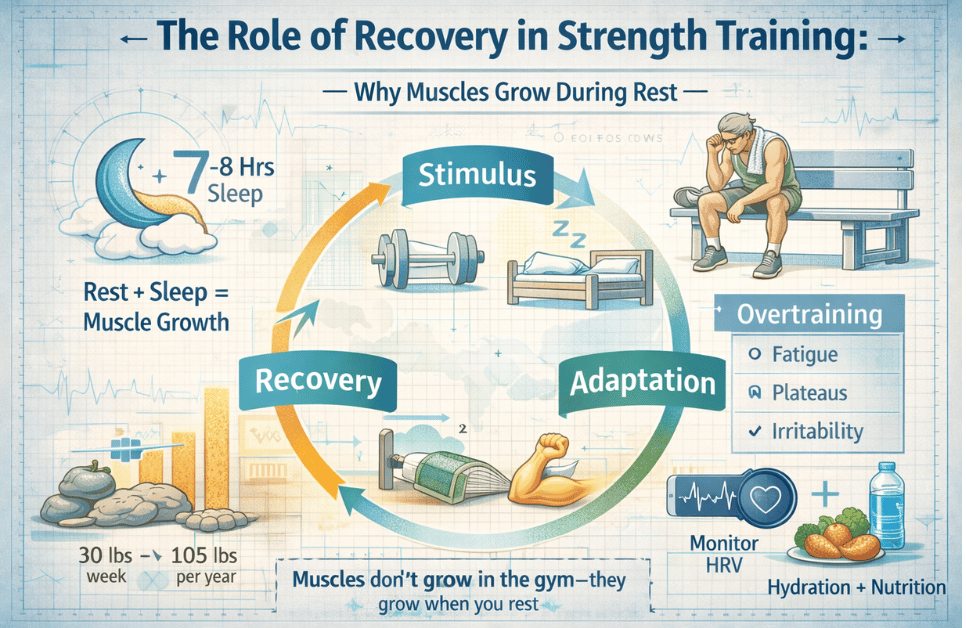
Muscles don’t grow in the gym; they grow from what you feed and restore them with afterward. Training breaks muscle fibers, but nutrition and hydration rebuild them stronger than before. This process, called muscle protein synthesis, depends on having the right nutrients available at the right time.

Think of your body like an engine. Exercise revs it up, but food and water are the fuel and coolant that keep it running efficiently. Without them, you can’t perform at your best, or recover properly afterward.

Key Insight

1. Protein: The Architect of Growth

When you lift weights or do resistance training, you create micro-tears in your muscle fibers. Protein supplies the amino acids your body needs to repair and rebuild those fibers. This process increases strength and muscle size over time.

Research shows that consuming 20–40 grams of high-quality protein within a few hours after exercise can maximize muscle repair and growth. Spreading protein intake evenly throughout the day, rather than eating most of it at once, further enhances recovery.1

Sources of lean protein: eggs, fish, chicken, tofu, lentils, and Greek yogurt.

Muscles don’t respond to effort alone, they respond to fuel timing. The post-workout meal is part of your training, not an afterthought.

2. Hydration: The Silent Power Multiplier

Even mild dehydration, just 2% of body weight lost through sweat, can reduce strength, endurance, and coordination. Water regulates temperature, lubricates joints, and helps transport nutrients to cells.

When you’re well-hydrated, your muscles contract more efficiently, your energy stays stable, and your recovery speeds up. Conversely, dehydration raises cortisol (the stress hormone), which can interfere with muscle growth and increase fatigue.

Hydration strategy:

  • Drink 500 ml (about 2 cups) of water 1–2 hours before training.
  • Sip water or electrolyte drinks during workouts if you’re sweating heavily.
  • Replenish with fluids afterward, especially if you feel light-headed or notice darker urine.

Hydration isn’t just about comfort, it’s about performance precision.

3. Carbohydrates and Fats: The Energy Partners

Carbohydrates are the body’s preferred energy source during workouts. They replenish glycogen, the stored fuel your muscles rely on during intense activity. Without enough carbs, your body starts breaking down protein for energy, slowing muscle recovery.

Healthy fats, on the other hand, support hormone balance, including testosterone and growth hormone, both vital for muscle repair and strength development.

Good carbohydrate sources: fruits, oats, rice, potatoes, and whole grains.
Healthy fats: avocados, olive oil, nuts, and fatty fish.

A balanced plate is like a balanced workout, each macronutrient plays a unique role in strength and recovery.

Real-World Metaphor: The Construction Crew

Imagine your muscles as a construction site.

  • Protein supplies the building materials (bricks).
  • Carbohydrates provide the power to run the machines.
  • Fats support the supervisors, the hormones that regulate progress.
  • Water keeps everyone cool and efficient on the job.

If any one element runs out, construction slows or stops entirely. Your body works the same way; growth depends on keeping all systems running smoothly.

My Reflection

After my workouts, I usually enjoy a simple but nourishing meal, a salad, and two large eggs cooked with a light olive oil spray. I keep my salads clean during the week, seasoning them with salt, pepper, or balsamic vinegar instead of dressing. For a mid-morning boost, I have a protein shake, which helps me stay fueled before dinner.

Our main sources of carbohydrates are wholesome and balanced: rice, oatmeal, carrots, sweet potatoes, and beans. We only have pasta once a week, keeping portions modest at about three ounces each. I’ve also been cutting back on bread, even though I love it, because I’m focusing on .

Today, I noticed a small drop in muscle mass, which was disappointing at first. But I quickly realized why it happened because I wasn’t able to eat enough protein yesterday while working at the office. Instead of getting discouraged, I see it as useful feedback. Next time, I’ll bring portable protein options, like beef jerky or a small shake, to stay on track.

Every small adjustment like this is part of my Kaizen approach, continuous improvement. It’s not about perfection; it’s about learning, adapting, and moving forward.

Biometric data

Change in Weight from Day 1: -5.4 lb.
Skeletal Muscle: 39.6%
Muscle Mass: 94.0 lb.

Adjustment Ideas (Strategic Adjustment)

  1. Prioritize Protein Timing: Have a protein-rich snack or meal within two hours after training. Keep it simple—boiled eggs, protein shake, or tofu with vegetables.
  2. Track Water Intake: Aim for at least 2–2.5 liters of water daily (more if sweating heavily). Use a water bottle with measurements to stay consistent.
  3. Pre-Workout Fuel Check: If energy dips mid-session, try adding a small carb source 30 minutes before training (like a banana or a few oats). Test and see what works best for you.

Note

  1. Kerksick, Chad M., Colin D. Wilborn, Michael D. Roberts, et al. “International Society of Sports Nutrition Position Stand: Nutrient Timing.” Journal of the International Society of Sports Nutrition 14, no. 1 (2017): 33. https://doi.org/10.1186/s12970-017-0189-4 ↩︎

Athena Takes Control: Upgrading Home HVAC

Brian’s fitness journal after a brain stroke

Today, we are finally upgrading the home HVAC. Last summer, our HVAC system had what you might diplomatically call “performance issues.” It worked, technically, but not with any particular enthusiasm. My wife and I briefly entertained the idea of minimizing its use. I’m not someone who enjoys living in an icebox. However, when the Nashville heat climbs into the high 80s. What makes it worth it is that it’s a good friend, Humidity. So, not having working air conditioning stops being a lifestyle choice and starts being a public safety concern.

Since my wife had back-to-back meetings today, the HVAC project fell squarely in my lap. This was fine. What was also fine, remarkable, even, was that the morning was finally warm enough to run without requiring an extra layer of psychological fortitude. I do love those mornings. I couldn’t linger, though: the installer was due within the hour, so I channeled that ticking clock into a personal challenge and hit my target pace for the second consecutive run. A small victory before the bigger one of the day. I got home with about a minute to spare, which is exactly the kind of margin that makes a man feel competent.

The crew confirmed what the HVAC technician had been telling us for years: our intake was far too small for the system. This explained a lot, honestly; it had been working harder than it needed to with less airflow than it deserved. Two installers arrived and set to work, and to everyone’s mild surprise, the whole job was done faster than expected. Efficient professionals make everything look easy.

Our New Home HVAC Control System

Now here’s my favorite detail: the new display pad is named “Athena.” Our cat, as regular readers may know, is named Artemis. If you’re keeping track of the Greek goddess count in our household, we are now at two. I am choosing to interpret this as a theme.

The new thermostat is a genuine upgrade, sleek, intuitive, and controllable via an app on my phone that took less time to set up than I expected. I’ve already configured our temperature schedule, and I’ll confess I’ve been playing with it a bit more than strictly necessary. Some people get new toys and can’t put them down; I get HVAC management software. We’re both just happy that this summer should be considerably more comfortable than the last one.

Until next time, may your air stay cool, your intake stay properly sized, and your goddess count stay exactly where you want it.