
Brian’s fitness journal after a brain stroke
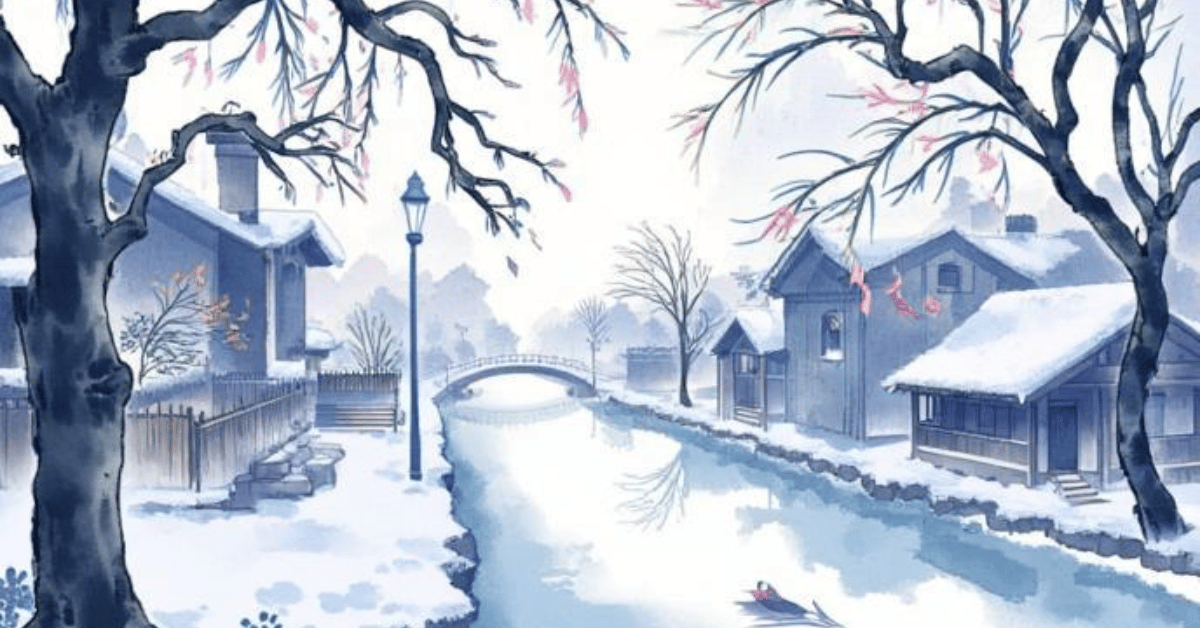
At last, the ice has begun its slow and reluctant retreat.
Today’s temperature rose about fifteen degrees compared to yesterday, which in winter logic qualifies as “practically tropical.” It is still cold, of course, but no longer the kind of cold that feels personally offended by your existence. Instead, it has settled into something far more reasonable—if winter can ever truly be called reasonable.
My wife, meanwhile, has taken it upon herself to conduct unofficial neighborhood inspections. While most people cautiously peer out from their windows, she ventures outside like a field researcher documenting the aftermath of a frozen experiment. She reports that although our power returned after several hours, many of our neighbors are still living in the candlelight era.
Our area is densely wooded, which is wonderful in spring, poetic in autumn, and deeply problematic during ice storms. Ice accumulates, branches snap, cables fall, and electricity quietly exits the conversation. Nature, it seems, prefers dramatic chain reactions.
According to her morning observations, the neighborhood at dawn is almost pitch dark. With no street lights functioning in several sections, it looks less like a suburban street and more like the setting of a philosophical novel about resilience. Curiously, if you walk just a few houses north, power returns as if nothing happened. Entire rows remain powerless, except for two mysteriously fortunate houses whose power lines are connected to a different street. Fate, it appears, also plays favorites in infrastructure.
To be fair, this is not a matter of incompetence. Tennessee rarely experiences this kind of ice storm, and the crews have been working long shifts to restore power under genuinely difficult conditions. Extreme weather does not politely follow regional expectations. It simply arrives, unannounced and unapologetic.
We still remember when a tornado hit north of Nashville several years ago and we lost power for days. Back then, it was near spring, so the cold was manageable. This time, however, the cold is far less forgiving. When the power went out, the temperature inside the house dropped noticeably, reminding us very quickly that electricity is not just convenience—it is survival. Shelters opened the very day the outages began, which speaks volumes about how serious prolonged cold can be.
My wife also discovered the most obvious culprit: fallen trees. In one section of the road, nearly a third of the path is occupied by broken branches and debris, with power lines dragged down alongside them. It is less a mystery and more a very visible cause-and-effect demonstration courtesy of physics and ice.
Thankfully, progress is visible. Roads are gradually being cleared, which is especially encouraging since my wife is planning to drive to the office tomorrow. Civilization, one cleared road at a time.
As for me, I may finally return to my running schedule tomorrow—assuming the road visible from our front window passes the safety inspection. It will still be cold, naturally, but no longer the extreme, bone-chilling cold of yesterday. In winter recovery, expectations are simple:
melting ice, stable power, clear roads, and perhaps—if fortune is especially generous—a fully normal routine returning without further dramatic weather plot twists.