
Take it Slow: Struggles of Picking up Piano After a Long Time Not Playing the Piano

In 2017, my parents-in-law and husband gifted me a piano because I had been sad about my broken keyboard. I had played the piano since I was three years old. I stopped practicing the piano when I moved to Canada. I was traveling for work, and I had simply other priorities. Although, I had a keyboard. As the keyboard was not full size, I could not play certain piano pieces. Playing the keyboard was so different from playing the piano. The keyboard broke ten years ago, and I stopped playing the piano entirely. With great excitement, I opened a box of my piano books that I brought from Japan and Canada as soon as the piano delivery guys left our house.

Struggles

I tried playing some piano pieces I used to play when I was young. I noticed some problems, which made me think that I could not play these piano pieces. 

I remember the notes, but I lost endurance. For example, I tried to play Beethoven’s piano sonata, No. 14 in C-sharp minor, Op. 27, No. 2, commonly known as Moonlight Sonata. I could not play the third movement in one go because I had no endurance. I was so tired after 2-3 pages into the part, and I could not move my fingers anymore.

I tried to play Partita #2 from Bach. I could not play a trill with my left 4th and 5th fingers’ at the 5th measure of the sinfonia. I could not perform the trill because I could not move my 4th and 5th left-hand fingers independently from the rest of my fingers. Then, I tried to play one of Bach’s sinfonia, the three-part inventions. I still felt that I did not have complete control of all my fingers. With frustration, I told my husband Bach would cry if he heard how I play his music. He laughed.

My music seems to have lost dynamics. A piece of music without dynamic is like listening to static sounds from an analog television when there is no transmission. I played the Waltz in D-flat major, Op. 64, No. 1, which is a short waltz from Chopin. The first section of the music is fast and very lively. I remember that my Piano teacher told me Chopin composed from seeing a puppy chasing after his tail. I put all my concentration on the movement of the fingers; I could not focus on the dynamic of the music. Therefore, instead of a livery puppy chasing after his tail, it was a picture of a puppy standing still motionless.

I will be lying if I said I was ok with this. I was utterly disappointed with my piano playing initially. But it is not all bad. I still remember some of the music. I need to work on my finger movement. I need to drop few levels, and I rebuild my skill level slowly. After all, I have all the time to practice piano as long as I don’t stop. Well, I had some initial disappointment with my piano playing, but I had no desire to quit relearning piano. I was very adamant about some of the music I wanted to play in the future.

I think anyone can learn to play piano at a later age if they put their minds to it. It can take longer if you pick up the piano piece with much more significant difficulty than your current abilities. Some people managed to do that, too. Recently, I watched a YouTube about a Japanese 52-year-old fisherman who started to play Liszt’s La Campanella (NHK, 2028, July 28). The crazy thing about this was that he did not even know how to read any musical score. He practiced the piano piece for 8 hours every day for seven years. To commit yourself to that level of dedication, you should possess a particular personality. You should not feel bad for not being able to put the story of extraordinary commitment. His case is rare. Although, anyone can play the piano. It would be best if you took it slowly and tactically. If you are adamant about getting into the piano as I did, you need to do the following: (1) assesses your personality; (2) Define your goals; (3) build the tactic; (4) identify potential obstacles and how to overcome the obstacles; and finally, you must understand that the process to achieve goals can be a long process.

Assessing Your Personality

It is crucial to assess your personality before building your goals or tactics. Everyone is different. Just like the Japanese fisherman, some can work toward a significant challenge despite skill gaps. I do not have that type of personality; therefore, I had to build and approach my goals differently. I like my plans to be short-term and just slightly beyond my current skill. I learned this technique from reading Mihaly Csikszentmihalyi’s book, Flow. Csikszentmihalyi (1990) explains that we must set our goals within our reach. If your goal is too far beyond your reach, you grow resentful or resign from achieving the goals. The research suggests most of us struggle with the vicious cycles of failures, leading to dissatisfaction. Unless you are in good condition, struggling to meet your basic human needs, we desire a sense of well-being. People gain satisfaction from achieving even partial goals, which leads to improving our quality of life. Why should we lower our quality of life? (pp. 8-10). This book was an eye-opener for me. I could make some big goals in the long run, but I make small goals to achieve larger goals. I feel fabulous even if the goal achieved is insignificant compared to the larger goals I created. I am making some progress toward my larger goals.

Overcoming the Rocks

Endurance

In 2017, I noticed I felt some muscle pains from playing the piano. I also noticed I felt discomfort from playing the piano for hours. Since I was not sure how much practice I could do, I took it very slowly. I started to practice whenever I had time between my other tasks. I began with practicing for only a few minutes, but I played the piano every day. I started losing track of my time during each practice. I noticed I was practicing for over one hour, and I did not even realize it. Playing piano was no longer painful.

Difficulty Level

I must drop the level of difficulty. Practicing piano music I played when I was young helps me to remember some of my problems. I dropped to Royal Conservatory level 8. I bought Royal Conservatory level 8books from Amazon. At least, I can still sight-read most of the songs at this level. It takes me approximately two weeks to memorize a 2-3 page piece. I found out my capacity by playing random piano pieces in 2017.

Finger Exercise

It took few years, but I felt ready to take my piano to the next level, which involved practicing piano the way my piano teacher showed me. I decided to work on my fingers’ agility, flexibility, strength, and endurance to fix my problems. Hanon is an excellent material to work on my stiff 4th and 5th fingers. I am currently using Hanon, Czerny, and Dohnanyi. Czerny is more melodic than Hanon, and I like it better for that reason. Dohnanyi is a good finger exercise. I struggled with playing Dohnanyi. I remember it was difficult when I was a child. I must put a lot of conscious effort into moving my fingers, even on simple exercises. The exercises wear me out considerably, and it can be pretty frustrating. My brain hardwires the movement. Eventually, my fingers will start to move. Dohnanyi teaches me how to play the piano properly.

Fear of many Flats and Sharps

I felt an illogical discomfort every time I play music with 4-5 flats or sharps, which I always had. When I was young, I got overwhelmed by music written in E major or C-sharp minor. To get rid of m illogical fear, my piano teacher made me practice Hanon no 1 to 20 in E major and C sharp repeatedly. I use the Brown Scale Book to practice scales, chords, and arpeggios, so I do not have to do any transposition of notes.

Use of Metronome to Start Slow

I use a metronome a lot. When I try to play faster than I comfortably can, I skip notes or hit the key with the wrong finger. So, I start slowly using metronome using correct fingering and dynamics until 1 or 2 levels above the recommended speed of the music. I practice a little section at a time because some areas require more attention than others.

Pedal Use

I do not use the pedal until I can play the music faster than its desired speed. Pedal-use masks my errors if I start using it in an earlier state. Then, I will learn the song improperly. It can be challenging to undo when you learned once. Sometimes these bad habits are persistent. When I was relearning inventions, I noticed the bad habits I developed in my teens. I remember my piano teacher pointing out those habits.

Compromise

Finally, I have to make a compromise regarding how much time I can spend practicing piano. I have full-time work. I have a family. There are other things I need to do besides playing the piano, which was my most significant obstacle to practicing piano. Fortunately, I live in an environment where I can play the piano early or late. I will jump on whenever I can make time. When I have only 30 minutes to play, I focus on the sections I need to learn after a bit of warm-up. It gets harder during weekdays, but I practice piano at least a little every day, so I do not feel guilty.

My Optimism & Future Playing List

I am currently relearning Bach’s 15 two-part inventions. I am relearning in the orders I once learned. I started mid-February this year, and I have memorized five as of the beginning of April. I expect it will take more time to relearn the 11th, 12th, and 15th inventions. At this level, I can insert some Sinfonias. My current goal is to complete the book by this fall. I am making progress with my practice slowly, but I do not mind at all. As long as I live and I have mobility, I can play the piano. The most important part is to embrace my progress, and I genuinely enjoy playing the piano again.

References

Csikszentmihalyi, Mihaly. (1990). Flow. [Kindle edition]. HarperCollins e-books.

NHK. (2020, July 28), Ohayonihon [Video]. Youtube. https://www.youtube.com/watch?v=o7PoiaMsJ1s&ab_channel=NHK
How to Make an Exercising Habit into a Long Term Commitment

There is an exercise that I always do, which is a Zumba game on my Switch Consol. Whenever I play this game, I want to keep doing it because I enjoy it. There is something I want to confess. I was never able to sustain my exercise habit in the past. I just did it because my parents wanted me to be active or to lose weight. So my exercise streaks come and go.

Sometimes, there are things we seem to fail at sustaining as our habits. Exercise is a common one. It is almost as if my brain is refusing to accept that I must exercise every day. Well, I thought I was too busy to exercise, but that was not entirely true. I was avoiding committing to regular exercise. It was much easier for me to see exercise as a temporary solution to make myself healthy or lose weight. I somehow managed to believe that I want to read or to learn other things instead of exercising. 

First, I thought easy access is one of the keys for me to getting into exercising habits. It is pretty interesting how the options for exercise have changed, and it is more accessible. My mother used to go to a regular aerobics class in a local community center when I was a kid. Now, there were many ways to get them Online such as YouTube or Amazon Prime. We can even do it from a console as one of a game.

Second, extreme weather can deter me from exercise. Running was another option for me when I was living in Canada or living on the west coast. Since I moved to Nashville, I realized that extreme weather could discourage me from running. I do not enjoy running in hot, humid weather. The last time I ran, I had no choice but to run in the early morning to avoid heat. Since it was hard to wake up early, this plan did not go well.

Finally, I also thought the exercise program must be something I enjoy doing. There is one exercise I keep coming back to even after I stop for a while. That was Zumba. I have first introduced to Zumba approximately 12-13 years ago from now. I like aerobics exercise, but I am not good at dancing. I was worried because I might feel embarrassed by dancing poorly. While I was a little embarrassed, I tried a Zumba class out of curiosity. The dance routine I like the most is the Zumba dance with Shakira’s Waka Waka. I loved the song, and I loved the dance Routine. Because of my work schedule, I could only attend few classes per week. I searched for Zumba on YouTube, and I was practicing the dance Routine when I missed the class. 

I decided to start Zumba again on my Switch Console because it seems to mitigate obstacles. Initially, getting a console was a reward for completing a university graduate program. Unfortunately, I missed purchasing it entirely since there was no console available at the store due to COVID-19. After completing one of my most significant projects at work, I still got the console at a little higher price than the retail price. I want to get back to exercise, and I want to do the exercise with something I will enjoy the most.

So we got the console. As soon as I downloaded Zumba, I tried a 30-minutes class. My first day of Zumba with my console did not sound like I initially thought since some Zumba songs were too intense for my cardio level. To complete the 30-minute Zumba Routines. I had to take a break after 15 minutes. I tried the next day, the same thing happened, but I could complete more songs from the same class. I finished off an entire 30-minute class in one go by the 4th day, and I accomplished a whole 30-minutes course by the beginning of the 3rd week. There was no problem in achieving a 60-minutes class by the end of the 3rd month. Cardio improves much faster than strength. 

I saw an immediate improvement in my resting heart rate. Due to lack of exercise and poor life habits, my resting heart rate was higher than it had formerly been and made me feel uneasy. There have been some gradual improvements in my sleep quality and energy level. Completing a class is an achievement that made me feel good. 

Learning dance and performance have positive impacts on our brain; according to Edwards (n.d.), learning and performing dance use many brain regions, including the motor cortex, somatosensory cortex, basal ganglia, and cerebellum. These brain regions are responsible for planning, executing voluntary movements, eye-hand coordination, and smoothly coordinating bodily motions (para. 3). Edwards (n.d.) also reported that learning and performing dance also improve mental health and our cognitive skills such as decision making and visual recognition (para. 6).

It has been several months since I started exercising with Zumba. I manage to do regular exercise with my busy schedule. I have not felt that my priority set for training should be lower than other activities because I started seeing other benefits than losing weight and lowering my heart rate. After several months of exercise, my job performance increased. Learning queries or new tax laws seemed much easier than before. I seem to memorize piano music much faster. In the book “SPARK,” Ratey & Hagerman (January 2008) suggested that exercise improves learning in multiple levels because it improves alertness, motivation, preparing nerve cells for learning, and developing new nerve cells (p. 53).

My real motivation for getting into exercise was because I was suffering from a leaky stomach problem. After investigating, I see exercise can be more than a temporary solution to my concerns, and I can also get so many additional benefits in the long term. So I pick the activities that can avoid many possible obstacles. I decided on the exercise program I enjoy. Even though I enjoy doing Zumba, I still could not complete an entire Zumba class when I started. I had to start slowly. I keep doing it because I enjoy doing so. Now I can complete a 60-minutes game. Several months have passed, and I feel I gained so many benefits other than losing weight from the exercise.

References

Edwards, S. (n.d.). Dancing and the Brain. Retrieved April 6, 2021, from https://hms.harvard.edu/news-events/publications-archive/brain/dancing-brain

Ratey, J., & Hagerman E. (2008). Spark: The Revolutionary New Science of Exercise and the Brain [Kindle Edition]Hachette Book Group.

First 4-Week of My Weight Loss Challenge

I decided to work on reducing my weight because I am quite a bit overweight. I noticed some negative consequents of being overweight. I tend to be hungrier than when I was average weight. My heart rate was higher. My energy level decreased. My clothing does not fit me well, and I lost confidence. I decided to challenge myself to lose weight. This blog is a summary of the progress of my first four weeks of this challenge. I experienced some benefits and some setbacks I wanted to share with you to help you lose weight.

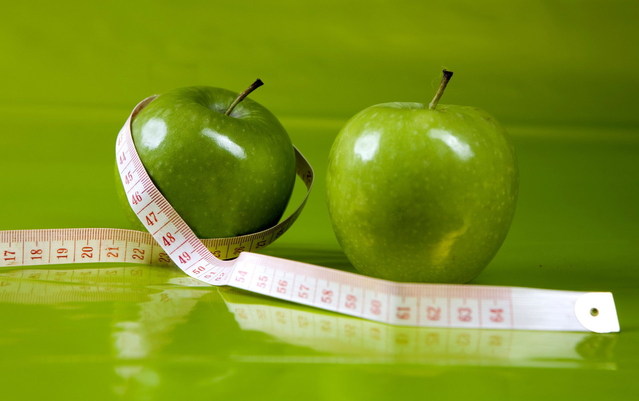
perfect figure Image by Justine FG via https://www.freeimages.com/photo/perfect-figure-1326465

Exercise

With a commitment to being healthy, I started with regular exercise. One of the biggest obstacles for me is making time for regular exercise. Since I am working from home, I could do 30 minutes of exercise during my lunchtime and 15 minutes after work. I picked my favorite workout, Zumba fitness, for my starting exercise. I used to go to Zumba class back in Canada, and I have only good memories associated with the activity. Zumba can be a strenuous exercise, and the calories consumptions can rise to approximately 230kcal with my weight within 30minutes. I use Zumba Burn it Up!. I played the Zumba game since we acquired a console that was able to run it last Christmas, and I like the game a lot. Having a good feeling about the activities is an excellent way to keep me going with my commitment.

Equipment

The equipment I use for my exercise commitment is Fitbit Charge 3/4, Nintendo Switch, and Zumba Barn it up!

Fitbit Charge 3 & Charge 4: I have two Fitbit watches listed here because I had to replace my Charge 4. I loved Charge 4 as it tracks your activity duration and calculates your active minutes by considering the workout intensity. The workout intensity level is an essential factor for the amount of calorie output as it changes the amount of exercise expenditure per minute. For example, you will be spending much more energy by hiking a hilly mountain than walking on a flat road. The reason is your heart rate is higher for more vigorous exercise. Fitbit is not a cheap watch, but it eliminates my time to calculate activity minutes. You can use a heart rate monitor for around $20-$30 instead. The minutes for a high-intensity activity are double activity minutes. 

Nintendo Switch and Zumba Burn it up!: I used a Nintendo Switch Game for an exercise program. You can use any exercise program as it is more accessible, and you feel you can commit to doing so. My husband, who disliked jogging, used Zombies, Run!, a phone app to make his jogging more interesting. He likes Zombie stories. He can now run 10 km in one go despite his physical challenges due to his brain trauma five years ago.

There are some improvements in my vital measurements, such as my resting heart rate and sleep quality in the first week. For example, my resting heart rate improved from 68 to 65, and my sleep quality increased from 76% to 83%. I was anxious about recent increases in my resting heart rates; it was an unexpected change.

It was not only good news, though. Soon, I started realizing exercising is not enough to lose weight. After a week of exercise, I lost only 0.3lb with 420 minutes of weekly active minutes. I began to review my Fitbit records, so I had to make modifications to my programs. 

I noticed the following problems: sleep duration, water intake, and food intake. They are all equally essential factors in being healthy, but I must make choices. I was in the middle of a financial audit, and I did not have time to research all the factors. It is crucial to understand why I am modifying my programs. I was unsure about implementing the changes in my food intake as not all diets available are healthy nor practical. I decided to work on sleep duration and water intake. Since Fitbit cares about and tracks them, they must be important factors.

Sleep Duration

Sleep duration is essential for losing weight. According to Markawld et al. (2013), insufficient sleep leads to weight gain and obesity due to the change in energy expenditure and the changes in satiety and hunger hormones. Inadequate sleep will increase our energy expenditure per minute to compensate for the lack of energy; however, the hormone changes also signal our brain to eat more carbohydrates and fat, resulting in increased weight gain. Duration of sleep impacts females (pp. 5695-5696).

Sleep duration is a crucial factor for losing weight. To improve my sleep duration, I decided to review my habits. One of my biggest obstacles was I have no sleep schedule. I also like watching YouTube or reading on my smartphone, resulting in less than 6 hours of sleep. Even with my blue light filtering glasses, how good is not having enough sleeping time. So I will make modifications to these habits. First, I made a strict sleeping schedule that imposed a penalty to pay my husband. Second, I made it more difficult to access my mobile devices as my mobile devices are one of the factors taking away my sleep time. Third, I made a habit of meditating two minutes before going to bed. At first, it was challenging, but I managed to increase my average weekly sleeping duration to 7hours and 43 minutes by the end of the 3rd week.

Water Intake

Hydrating our body is essential for our health. There is an exciting news journal you can read on the John Hopkin University website. There are multiple benefits to drinking enough water, but I focused on a few relevant factors to this program. 

According to HR NewsWire published (Jan 15, 2020), water helps hydrate our body and lose weight. Research conducted by Elizabeth Huggins suggested drinking 2 cups of water before eating breakfast, lunch, and dinner decrease food intake by 22% on average. A 2013 study reported that drinking approximately two cups of 71F water before breakfast, lunch, and dinner helped reduce body mass index and improve body composition score by 14% among healthy adults due to the increases in the body’s metabolic rate 33% average. The reason is the body tries to recover the heat lost from drinking cold water. 

Finally, drinking water helps us exercise more effectively. Melina Jampolis, a board-certified physician nutrition specialist, explains that water dissolves and distributes electrolytes required for muscle contractions. Therefore, proper hydration will more effectively gain muscles. We tend to lose hydration during exercise. Sweat has its essential role in regulating our body temperature. So, it is crucial to have enough water before and during training (para. 4 – para. 15).

I struggled with implementing this habit. Initially, I set up a drinking schedule like 12 oz after waking up, 12 oz at 10 a.m., and so on. It became more challenging when I could not take time to drink due to auditors’ phone calls that lasted more than I would like. Then I missed the scheduled time to drink the 12 oz of water at 10 a.m. After few days of struggling, I drank 12oz of water after I go to the washroom. Somehow this method worked for me—the act of going to the restroom triggers my memory to drink 12 oz of water. Well, everyone has to go to the washroom sometimes after all.

I think having a sufficient sleep gave me more energy for being active. The effect of improving my sleeping habits and drinking enough water brought me a fantastic result of losing 3.7 lb in 2 weeks. 

Conclusion

My tip is to work on your goals even when you encounter some challenges. Losing weight can be tricky. In some weeks, you may gain weight, or it may not change at all. It can be frustrating. A slight modification in programs may help you to accomplish losing weight. The most important thing is that you will keep working on it because maintaining a healthy weight will become your lifetime commitment. 

References

Jan 15, H. N. / P. & 2020. (2020, Jan 15). Yes, drinking more water may help you lose weight. The Hub. https://hub.jhu.edu/at-work/2020/01/15/focus-on-wellness-drinking-more-water/

Markwald, R. R., Melanson, E. L., Smith, M. R., Higgins, J., Perreault, L., Eckel, R. H., & Wright, K. P. (2013). Impact of insufficient sleep on total daily energy expenditure, food intake, and weight gain. Proceedings of the National Academy of Sciences of the United States of America110(14), 5695–5700. JSTOR.