
Day 5 of 100 Days Muscle Resistance Workout Challenge
Topic: The connection between physical strength, neuroplasticity, and mental clarity.
Learning Material
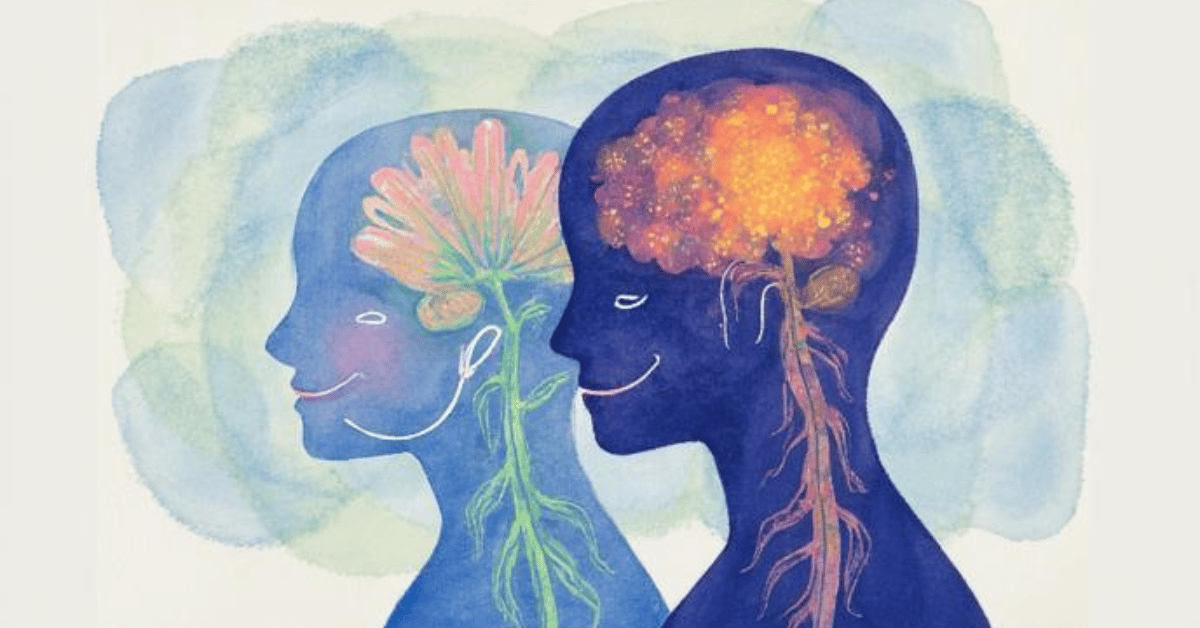
We often think of muscle training as something that shapes the body—but it also shapes the brain. Every time you challenge your muscles, you’re also boosting brain health through a process called neuroplasticity—the brain’s ability to form new connections and adapt over time.
Exercise as Brain Fertilizer
When you contract your muscles, they release proteins called myokines. These travel through the bloodstream and act on the brain, encouraging the growth of new neurons and connections. One of the most powerful of these is BDNF (Brain-Derived Neurotrophic Factor), sometimes nicknamed “Miracle-Gro for the brain.”
Strength Training and Mental Clarity
While cardio has long been associated with brain health, strength training plays a unique role. Studies show that resistance training improves memory, attention, and decision-making. A randomized controlled trial of adults aged 70–80 found that regular resistance training significantly improved executive function and functional performance, supporting the role of strength training in maintaining cognitive health and brain plasticity in older age.1 Think of it as decluttering your mental desktop—each rep gives your brain a little more clarity and focus.
Stress Resilience and Mood
Strength work doesn’t just sharpen thinking—it helps regulate mood. Training teaches the brain how to cope with stress by lowering baseline cortisol levels and releasing endorphins. People who lift consistently often report feeling calmer and more emotionally balanced.
Example / Story
In one study, older adults who practiced strength training twice a week not only improved their mobility but also scored higher on cognitive tests. Some participants described it as “lifting weights for the body and the brain.” The same is true for younger adults—just a few weeks of resistance training can improve focus at work or school.
My Reflection
I woke up an hour later than usual today, worn out from muscle training. Still, I pushed myself to go out for my morning cardio. My muscles are sore, which reassures me that I’ve challenged them enough to start breaking down and rebuilding.
Since starting this project, my eating habits have shifted. I’m paying more attention to protein—adding extra eggs, for example. My husband struggles to get enough protein, and I used to use that as an excuse not to eat much myself. I’m a picky meat-eater, so my options are limited. Beans and tofu work for me, but I know I’m still not getting quite enough.
Lately, my first meal has been a salad with eggs and a splash of olive oil. It keeps me full and helps me avoid snacking. Even though I feel tired, the combination of training and healthier eating habits leaves me with a deeper sense of energy.
Morning cardio has been my anchor for years. With my naturally low blood pressure, it’s the only way I can shake off sluggish mornings. Once I get moving—whether brisk walking or light jogging—I feel energized and focused. Strength training, on the other hand, has never been my favorite. But I’ve noticed that since adding it, I’ve had more sustained energy and clearer focus throughout the day, even when I wake up exhausted.
It makes me wonder: how much more impact will strength training—and reflecting on it through journaling—have over time? I’ll keep writing about it, so I can see how both my body and mind continue to change.
Biometric data
Change in Weight from Day 1: -2.2 lb.
Skeletal Muscle: 39.1%
Muscle Mass: 94.8 lb.
Adjustment Ideas (Strategic adjustment)
- Experiment with one new protein source this week (e.g., lentils, tempeh, Greek yogurt) to expand your options.
- Prioritize 7–8 hours of sleep to give muscles and brain the recovery time they need.
- Add a brief “cool-down reflection” after training: jot down one thought or idea that felt clearer post-exercise.
Note
- Teresa Liu-Ambrose et al., “Resistance Training and Executive Functions: A 12-Month Randomized Controlled Trial,” Archives of Internal Medicine 170, no. 2 (2010): 170–178, https://doi.org/10.1001/archinternmed.2009.494. ↩︎
Bibliography
Liu-Ambrose, Teresa, Jennifer J. Eng, Alison S. Nagamatsu, Lindsay J. Handy, David M. D. MacKay, and Teresa C. Ashe. “Resistance Training and Executive Functions: A 12-Month Randomized Controlled Trial.” Archives of Internal Medicine 170, no. 2 (2010): 170–178. https://doi.org/10.1001/archinternmed.2009.494.